
Pablo Sepulveda explores systems thinking and sufficiency at ASA2025 Industry Symposium
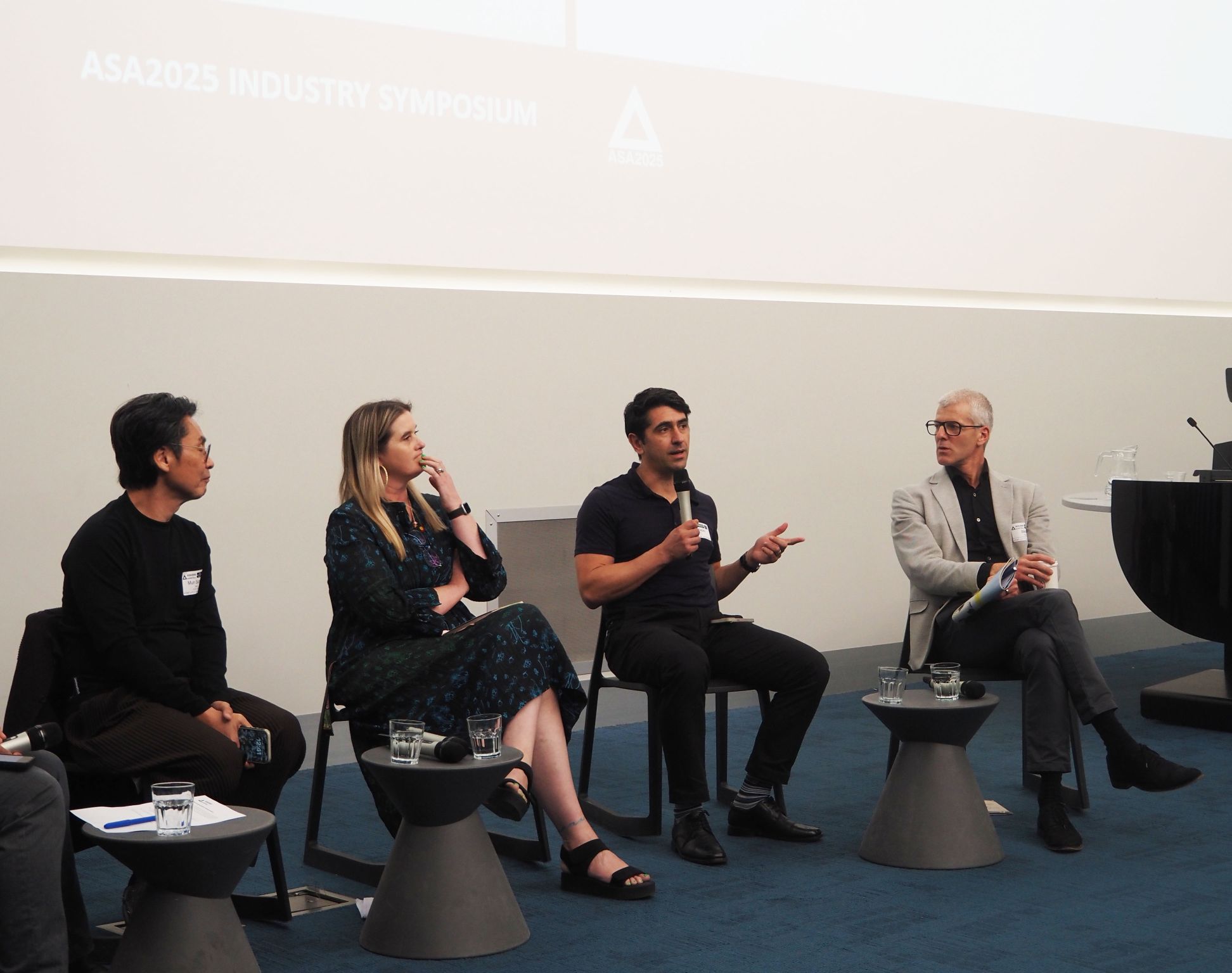
At the ASA2025 Industry Symposium in Melbourne, Impact Futures’ Sustainability Leader – Australia, Pablo Sepulveda, joined sector leaders to emphasise a central message: delivering healthy buildings within planetary boundaries demands systems thinking.
How can architecture, policy, and practice work together to accelerate climate action in the built environment?
This was the question driving a dynamic panel at the ASA2025 Industry Symposium, where Pablo Sepulveda joined Cathy Oke, Director of the Melbourne Centre for Cities; Stefan Preuss, Associate Victorian Government Architect; and Mun Sum Wong, Founding Director of WOHA, with Dr James Helal, Assistant Dean (Sustainability) at the University of Melbourne, as moderator. The discussion explored how design, policy, and leadership can intersect to create buildings and cities that are both healthy for people and respectful of ecological limits.
The discussion highlighted practical ways architects, policymakers, and industry leaders can accelerate climate action in the built environment, showing how to think systemically, act earlier in the design process, and collaborate across disciplines to create buildings and cities that are healthy, sustainable, and resilient.
Break down silos and work across disciplines.
Collaboration across architecture, engineering, and policy is essential. Breaking down silos allows for earlier interventions, more strategic solutions, and better alignment between technical, social, and ecological goals.
Adopt a systems-thinking approach.
Collaboration across architecture, engineering, and policy is essential. Breaking down silos allows for earlier interventions, more strategic solutions, and better alignment between technical, social, and ecological goals.
Shift from efficiency to sufficiency.
Efficiency alone is not enough. Designing for sufficiency, meeting human needs without overconsuming resources, supports self-sufficiency at building and precinct scales and encourages consideration of embodied carbon beyond material choice.
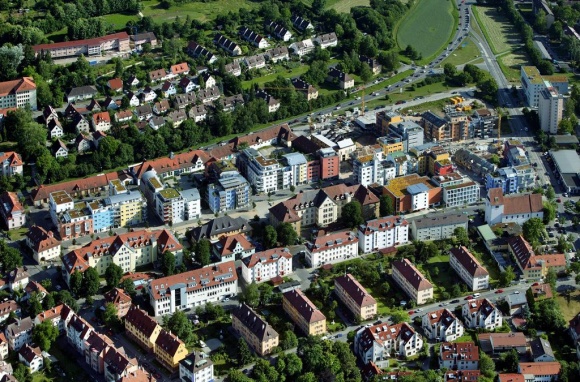 Tübingen’s Loretto and French Quarter (Source: Livable Cities)
Tübingen’s Loretto and French Quarter in Germany demonstrates sufficiency at the urban scale. Developed on a former military base, the project creatively reused all existing buildings, converting barracks and officer housing into affordable, functional homes. The neighbourhood was designed as a “City of Short Distances,” with mixed-use streets, compact housing, and nearby workplaces and amenities, allowing residents to meet most daily needs within a 10-minute walk. Housing types were based on similar ways of living and social expectations, promoting affordability and community cohesion. Integrating green courtyards, energy-efficient buildings, and diverse social spaces, the project shows how sufficiency can guide sustainable urban planning while delivering ecological, social, and economic benefits1.
Apply tools early to guide decisions.
Applying design and analytical tools early in a project can shape outcomes proactively. Combining numbers with narrative helps clients understand complex choices, build trust, and enables strategic influence rather than reactive problem-solving.
Challenge assumptions and think upstream.
Asking “what is the real problem?” rather than accepting constraints can unlock innovative solutions. Architecture can play a leading role in shaping upstream decisions that influence long-term outcomes for both people and the planet.
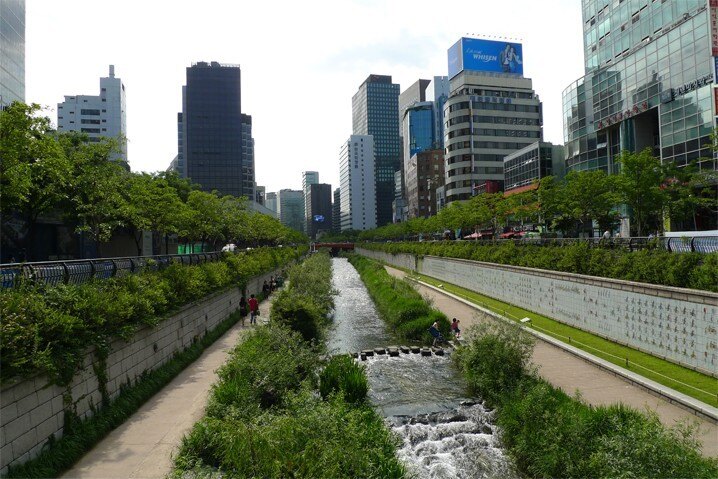 Cheonggyecheon Stream (Source: Landscape Architecture Foundation)
Seoul’s Cheonggyecheon Stream Restoration Project removed an elevated highway to uncover and restore a buried urban waterway through the city centre. Today, the project is a 5.8 kilometre ecological corridor and public space that reframes flooding, heat, and congestion not as isolated issues, but as symptoms of deeper systemic choices. By replacing car-dominated infrastructure with ecological and civic space, it demonstrates how working with natural processes can deliver environmental performance, social value, and long-term resilience. The key lesson is to adapt, not just control2.
Learn from real-world examples.
Projects that prioritise sufficiency demonstrate how design can deliver ecological, social, and economic benefits simultaneously. Architecture has the potential to shape not just buildings, but systems, behaviours, and institutions.
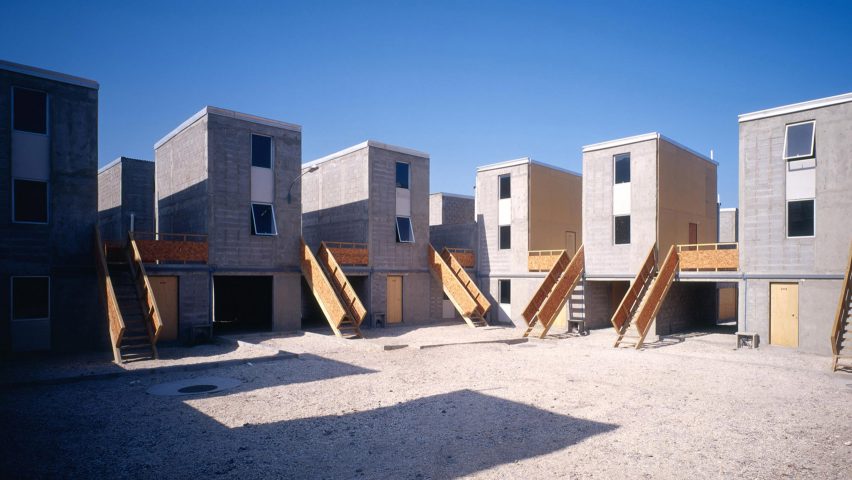
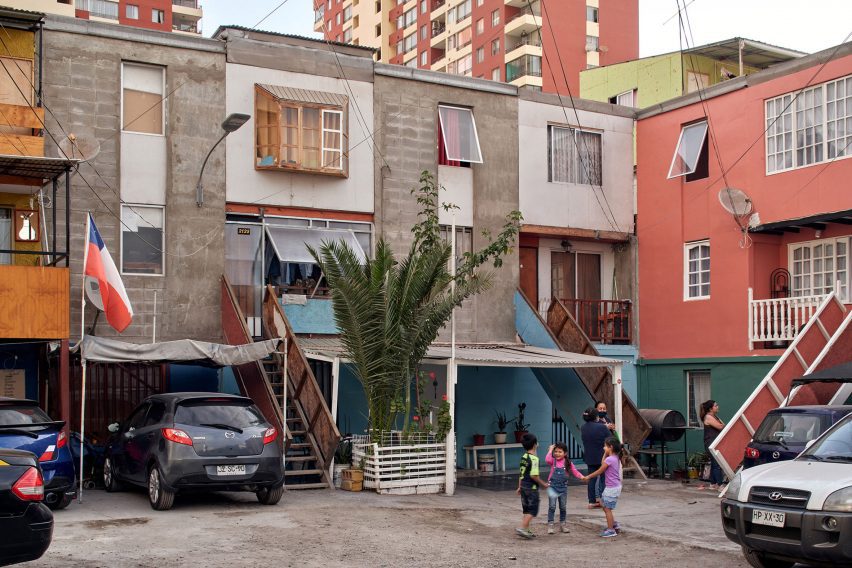
ELEMENTAL’s Quinta Monroy housing in Chile illustrates this in practice. Working within severe constraints, including limited funding, land scarcity, and long-term social responsibility, the project reframed sustainability as a question of sufficiency rather than optimisation. By delivering a durable structural framework that residents could incrementally adapt and extend, the design reduced upfront material use, avoided premature obsolescence, and embedded long-term resilience into the housing system. Sustainability here is systemic, not additive3.
1 Livable Cities. (2018, November 9). Tübingen’s Loretto and French Quarter: Original city, short distances. Retrieved December 16, 2025, from https://livablecities.org/2018/11/09/articles-tubingen-s-loretto-and-french-quarter-original-city-short-distances/
2 Landscape Architecture Foundation. (n.d.). Cheonggyecheon Stream Restoration Project. Landscape Performance Series. Retrieved December 16, 2025, from https://www.landscapeperformance.org/case-study-briefs/cheonggyecheon-stream-restoration-project/
3 Dezeen. (2025, January 10). Quinta Monroy housing by ELEMENTAL. Retrieved December 16, 2025, from https://www.dezeen.com/2025/01/10/quinta-monroy-housing-elemental-alejandro-aravena-21st-century-architecture/